 blog
9 Best Florida Coastal Towns for Remote Workers
Last Updated: October 30, 2026
Quick Summary
The best Florida coastal towns for remote workers are the ones that pair beach access with verified internet, a realistic total monthly budget, and manageable storm and flood risk. Check connectivity at the specific address, since availability can vary street to street.
- Verify internet at the exact address using the FCC National Broadband Map, not the town name.
- Ask providers for the upload speed, since cable upload often lags download and causes choppy video calls.
- Compare towns on total monthly cost, including insurance, utilities and HOA fees, not rent alone.
- Check the FEMA flood zone for the specific property before budgeting or making an offer.
- Test the connection in person on a weekday afternoon, using a video call rather than a browser speed test.
Table of Contents
- Why Florida's Coastal Towns Work for Remote Workers
- How We Chose the Towns on This List
- Florida Towns with High-Speed Internet for Remote Work
- Affordable Coastal Towns in Florida for Remote Workers
- Florida Coastal Towns with Coworking Spaces
- Cost of Living in Florida Beach Towns: Total Monthly Budget
- Hurricane, Flood and Climate Risk Before You Move
- Choosing Your Coastal Town and Finding a Home Next
- Frequently Asked Questions
Florida's coastal towns have become a serious option for remote workers who want beach access without giving up reliable internet, real restaurants and a workable budget.
Remote work changed the math. A worker who once needed to live near an office can now pick a town for its sunshine, walkability or quiet. But the appeal fades fast if the internet drops every afternoon or the rent eats most of the paycheck.
Why Florida's Coastal Towns Work for Remote Workers
A coastal town is a small community on or near the ocean or Gulf, with its own character and everyday amenities. See why people are moving to Florida counties to understand the broader trend behind the shift.
Most coastal towns share a few traits that matter for remote work:
- Beach and waterfront access for midday breaks and weekend recreation
- Small-town charm with local cafes and neighborhood feel
- Real amenities like restaurants, grocers and medical care within a short drive
The trade-off is that smaller towns can have thinner infrastructure. That is why the next sections focus on internet, cost and storm risk rather than sunshine alone.
How We Chose the Towns on This List
Remote workers typically weigh factors such as internet reliability, housing costs, access to coworking or work-friendly cafes, and day-to-day amenities. Coastal risk also matters, because flooding or storm exposure can make insurance and upkeep hard to manage.
Florida Towns with High-Speed Internet for Remote Work
Internet is the first thing to verify, because it is the easiest thing to get wrong. A town can look perfect on a map and still have thin broadband coverage on the specific street you are considering. This section covers how to verify connectivity at the address level and what to expect from the main provider types.
The three connection types you will encounter
- Fiber, the most reliable option for remote work because upload and download speeds are symmetrical. Fiber is concentrated in the larger coastal metros and in newer subdivisions; availability at a specific address should be confirmed directly with the provider, not assumed from a ZIP code.
- Cable (DOCSIS), widely available in established coastal towns and generally fast on download, but upload speeds are typically a fraction of download speeds. That asymmetry is what causes choppy video calls even when a speed test looks impressive.
- Fixed wireless and satellite, common in the smallest beach communities and on barrier islands where trenching fiber is expensive. Latency is higher, which matters for video conferencing and VPN use. Treat these as a backup, not a primary connection, unless nothing else is available.
How to verify service at a specific address
- Pull the FCC National Broadband Map and search the exact address, not the town. It shows reported availability by technology and provider, the same dataset regulators use. Use it to build a shortlist of providers to call.
- Call each provider and ask for the address-level qualification. Ask three questions: What is the maximum upload speed at this address? Is the connection fiber, cable, or fixed wireless? What is the typical outage history in this neighborhood?
- Ask for the upload tier, not just the download tier. A 1 Gigabit download plan with a 20-35 Mbps upload ceiling is common on cable and is the single most frequent cause of poor video-call performance.
- Test in person before you commit. Run a speed test at the property during a weekday afternoon, when neighborhood congestion peaks, and run a second test on a video call rather than a browser speed test.
- Line up a backup. A mobile hotspot on a major carrier, plus a phone tethering plan, covers the gap during an outage. Check the carrier's coverage map for the specific block, because coastal coverage can vary street to street.
What to expect by town type
- Larger coastal cities and established metro-adjacent towns, fiber and cable competition is common, and business-grade service is usually available. This is where a remote worker with heavy video-call needs has the most options.
- Mid-sized beach towns with a year-round population, cable is typically the primary option, with fiber reaching newer developments. Upload speeds need to be confirmed, not assumed.
- Small barrier-island and rural coastal communities, fixed wireless and satellite are more common, and fiber may not reach the address at all. These towns can still work for remote work, but only if you verify the connection before signing a lease or making an offer.
Reliable connectivity is usually easier to find in the larger coastal cities than in the smallest beach communities. Smaller towns can still work well, but the checking has to happen at the address, not the town.
Affordable Coastal Towns in Florida for Remote Workers
Affordability depends on whether you plan to rent or buy, and on how close you want to be to the water. Waterfront properties and short-term rental areas often run well above the rest of a county. What a remote worker actually needs is a total monthly budget that includes the costs unique to coastal living, insurance, taxes, and utilities, because those line items can change which town is affordable.
Build a total monthly budget, not a rent comparison
Use the same line items for every town you are considering so the comparison is honest:
- Housing, rent or mortgage principal and interest, plus HOA or condo association fees where they apply. HOA fees in coastal communities can be substantial and are often omitted from online listing estimates.
- Property insurance, homeowners insurance in coastal areas is materially higher than inland, and wind and flood coverage are often separate policies. Renters insurance is far cheaper but still worth pricing.
- Property taxes, Florida levies property tax at the county and municipal level, and the millage rate varies by location (Florida Dept. of Revenue - Property Tax). Use the county property appraiser's website to pull the actual assessed value and tax history for a specific address rather than estimating from the list price.
The insurance line is the one that changes the answer
Insurance is the line most often left out of early estimates, and in coastal areas it can change the answer on which town is affordable. Two towns with similar rents can have very different total costs once wind, flood, and property tax are included. Before you compare towns, get quotes for the exact address, not a town average, because elevation, flood zone, roof age, and construction type all move the premium.
Rent versus buy, and the seasonal price swing
If you plan to rent, ask about lease terms and seasonal pricing. Many coastal rentals cost more in peak months, and a multi-month stay that spans the high season can cost meaningfully more than the same number of months in the off-season.
If you plan to buy, the monthly budget should include the full escrow, principal, interest, property tax, and insurance, plus HOA dues and any special assessments.
What "affordable" realistically means on the coast
Affordable does not always mean cheap. The best value is often a town a little inland that keeps you close to the water for a reasonable price, or a coastal town where you trade a waterfront view for a short drive to the beach and a lower flood zone.
Confirm current figures with each provider, insurer, and county property appraiser.
Florida Coastal Towns with Coworking Spaces
Not every remote worker wants to work from home. Coworking spaces and work-friendly cafes give structure, a place to meet people and a break from the home office.
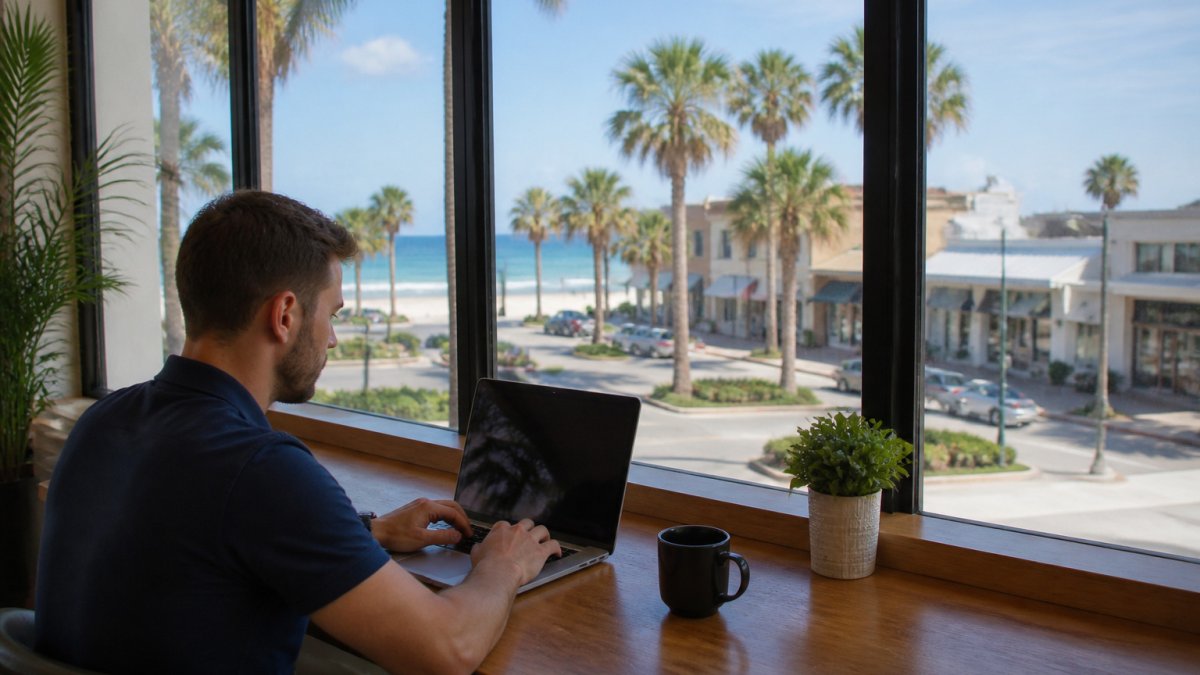
Look at the following before you commit:
- Day passes versus monthly memberships, so you can test the space first
- Hours of operation, especially if you work across time zones
- Meeting rooms for client calls that need privacy
Some smaller towns have only one or two options, so a backup plan for a quiet home office or a library is worth having.
Cost of Living in Florida Beach Towns: Total Monthly Budget
The rent number is only part of the picture. A realistic monthly budget also includes utilities, internet, insurance, property taxes if you own, groceries, dining out, and transportation. Many people underestimate the total because they compare only the mortgage or the rent.
Build your budget with these line items:
- Housing (rent or mortgage, plus HOA fees where they apply)
- Homeowners or renters insurance, which can be significantly higher near the coast
- Utilities and high-speed internet
Confirm current figures with each provider.
The rent figure is only part of the monthly picture, so the budget below lists the line items to total before comparing towns.
| Line item | What to include | Why it matters |
|---|---|---|
| Housing | Rent or mortgage, plus HOA fees | HOA fees are often left out of estimates |
| Insurance | Homeowners or renters, often higher near the coast | Can change which town is affordable |
| Utilities | Utilities and high-speed internet | Part of the full monthly total |
| Transportation | Vehicle costs and fuel | Many coastal towns are car-dependent |
| Lifestyle | Groceries, dining out and recreation | Varies most between coastal towns |
Hurricane, Flood and Climate Risk Before You Move
Storm and flood exposure is the factor many lifestyle guides skip. Coastal Florida is exposed to hurricanes, storm surge and flooding, and that affects insurance, resale value and how much upkeep a home needs.
Before you choose a town, check:
- The flood zone designation for the specific property through the Federal Emergency Management Agency (FEMA) flood maps
- Elevation and drainage around the home, not just the town
- Insurance quotes for the exact address before you make an offer
A home inspection is a useful step here, because it can catch structural issues and moisture problems that are costly to fix. See what inspections catch in Sarasota homes before you buy a coastal property.
Choosing Your Coastal Town and Finding a Home Next
Start with your non-negotiables: the internet speed you need, the monthly budget you can sustain, and how close you want to be to the water.
If you are ready to look at homes, the next step is to explore what is currently on the market in the area you have chosen. Read our guide to moving to and buying in Palm Beach County for practical steps on the move.
Frequently Asked Questions
What are the best coastal towns in Florida for remote workers?
The best coastal towns for remote workers depend on what matters most to you: internet reliability, rent, walkability or a quieter pace. Towns with established broadband, nearby coworking spaces and a mix of restaurants and everyday services tend to suit full-time remote work best. Compare several towns on the specific factors your job depends on, and verify current internet providers at each address before you commit to a neighborhood.
Which Florida beach towns have reliable internet for working from home?
Reliability varies by street, not just by town, so check provider availability at the exact address you are considering. Fiber and cable options are generally stronger than fixed wireless in coastal areas, and many towns have multiple providers. Ask the landlord or seller for recent speed test results, and confirm that the service plan you need is actually offered at the property before signing a lease or purchase agreement.
Is it expensive to live in a Florida coastal town?
Coastal living can cost more than inland Florida, particularly for housing, homeowners insurance and flood coverage. Your total monthly budget should include rent or mortgage, utilities, insurance, property taxes where applicable and transportation. Pricing depends on property type, season and location, so request current rental listings and insurance quotes for the specific areas you are considering.
What should remote workers consider before moving to a Florida beach town?
Before moving, confirm internet service at your specific address, price out your full monthly budget including insurance, and review flood zone and hurricane risk. Visit during both peak and off-season to see how traffic, rental availability and business hours change. For expert guidance on buying or renting in Florida's coastal markets, contact The Comerford Group for current listings and local market insight.