 Ultimate guide
The Florida Real Estate Closing Process Explained
Last Updated: November 26, 2026
Quick Summary
A florida real estate closing is the formal meeting where ownership transfers from seller to buyer, funds are disbursed, and the deed is recorded in county public records. The closing appointment itself is short, but the preparation behind it, title search, financing, inspections, and closing cost review, determines whether the purchase goes smoothly.
- The buyer typically deposits earnest money within 3 days of contract.
- The lender delivers the Closing Disclosure 3 business days before closing.
- Buyers should review the Closing Disclosure at least 3 business days before closing.
- Confirm wire instructions by phone using a number obtained independently, never one from the email.
- After signing, confirm the deed was recorded in the county's official records.
Table of Contents
- What Happens at a Florida Real Estate Closing?
- The Florida Home Closing Timeline From Contract to Keys
- Title Search, Title Insurance, and Clearing Title Defects
- Florida Closing Costs for Buyers and Who Pays What
- Your Florida Closing Checklist for Buyers
- Florida Closing Documents You Will Sign and Receive
- Wire Fraud, Delays, and Remote Closings: What Can Go Wrong
- Start Looking: Getting Your Closing Scheduled With The Comerford Group
- Frequently Asked Questions
What Happens at a Florida Real Estate Closing?
A Florida real estate closing is the formal meeting where ownership of a property transfers from seller to buyer, funds are disbursed, and the deed is recorded in the county's public records. This guide walks through the Florida real estate closing process step by step, from contract to keys.
The closing itself is short. The preparation behind it is not. Understanding what happens before, during, and after that signing appointment is what separates a smooth purchase from a stressful one.
Who Does What: Buyer, Seller, Closing Agent, and Title Company
Florida closings typically involve four parties, and knowing each role prevents confusion on signing day. The buyer reviews documents, secures financing, and brings certified funds. The seller signs the deed and clears any liens. A closing agent or real estate attorney coordinates the settlement, while the title company researches ownership and issues title insurance.
Choosing the right representation early matters, and our guide on how to choose a Florida Realtor for a smooth home purchase covers what to look for before you commit.
The Florida Home Closing Timeline From Contract to Keys
Deadlines in the purchase contract govern every stage of the closing timeline, and the length of the process varies with the type of financing and the transaction.
Milestones and Who Owns Each One
| Milestone | Typical Timing | Responsible Party |
|---|---|---|
| Earnest money deposit | Within 3 days of contract | Buyer |
| Title search ordered | Within 5-10 days | Closing agent or title company |
| Inspection period ends | Per contract terms | Buyer |
| Loan approval | 21-30 days | Buyer's lender |
| Closing disclosure delivered | 3 business days before closing | Lender |
| Final walkthrough | Day before or day of closing | Buyer |
| Signing and funding | Closing date | All parties |
A common mistake is treating these dates as flexible. They are not. Missing the inspection deadline or the financing contingency date can cost a buyer their deposit.
Title Search, Title Insurance, and Clearing Title Defects
A title search examines county public records to confirm the seller has the legal right to transfer the property and to uncover any claims against it. The title company then issues a title commitment outlining what must be resolved before closing.
A title defect is any issue that clouds ownership, such as an unresolved lien, a missing heir, a recording error, or an old mortgage that was never satisfied. Most defects are fixable, but they take time. A payoff statement for an existing mortgage, a corrected deed, or a signed release may be required.
Owner's title insurance protects the buyer against defects that surface after closing. Lender's title insurance protects the mortgage holder only. Buyers should understand the difference before the closing disclosure arrives. Sellers in Sarasota County and elsewhere also complete disclosure requirements that can surface title issues early, which is why our overview of Sarasota County seller disclosure requirements is worth reading before your title search begins.
Florida Closing Costs for Buyers and Who Pays What
Florida closing costs are not a single number, they are a stack of line items split between buyer and seller according to the contract, lender guidelines, and local custom.
Documentary stamp tax on the deed. Documentary stamp tax on the deed is calculated on the purchase price, and the exact amount should be confirmed with your closing agent. Who pays it is set by the contract.
Title insurance. What varies is who pays for which policy and whether the buyer receives a simultaneous-issue discount when both lender's and owner's policies are purchased together. Ask your closing agent to show the premium split on the title commitment.
How to verify the numbers. Compare the Loan Estimate from your lender line by line against the Closing Disclosure you receive before closing, and raise any large difference with your lender before signing.
Budget beyond the closing table. Closing costs are only part of the cash you need. Our tips for choosing the right homeowners insurance deductible help you plan for this cost.
Your Florida Closing Checklist for Buyers
A Florida closing checklist for buyers keeps the final weeks organized. Work through these items in order:
- Confirm your earnest money deposit was received and deposited into escrow
- Complete all inspections before the contract deadline
- Submit your full loan application and respond to lender requests promptly
- Review the Closing Disclosure at least 3 business days before closing
- Arrange certified funds or a verified wire for your cash to close
- Confirm homeowners insurance is bound and effective on the closing date
- Schedule the final walkthrough
- Bring government-issued photo ID to the signing appointment
- Keep copies of every document you sign
First-time buyers have additional considerations around down payment assistance and program eligibility. Our breakdown of first-time homebuyer requirements in Florida for 2026 covers what documentation those programs require.
Florida Closing Documents You Will Sign and Receive
The closing documents package includes the deed, the settlement statement, loan documents, and a stack of disclosures. The Closing Disclosure is the form your lender delivers before closing, itemizing your loan terms and costs (What is a Closing Disclosure?).
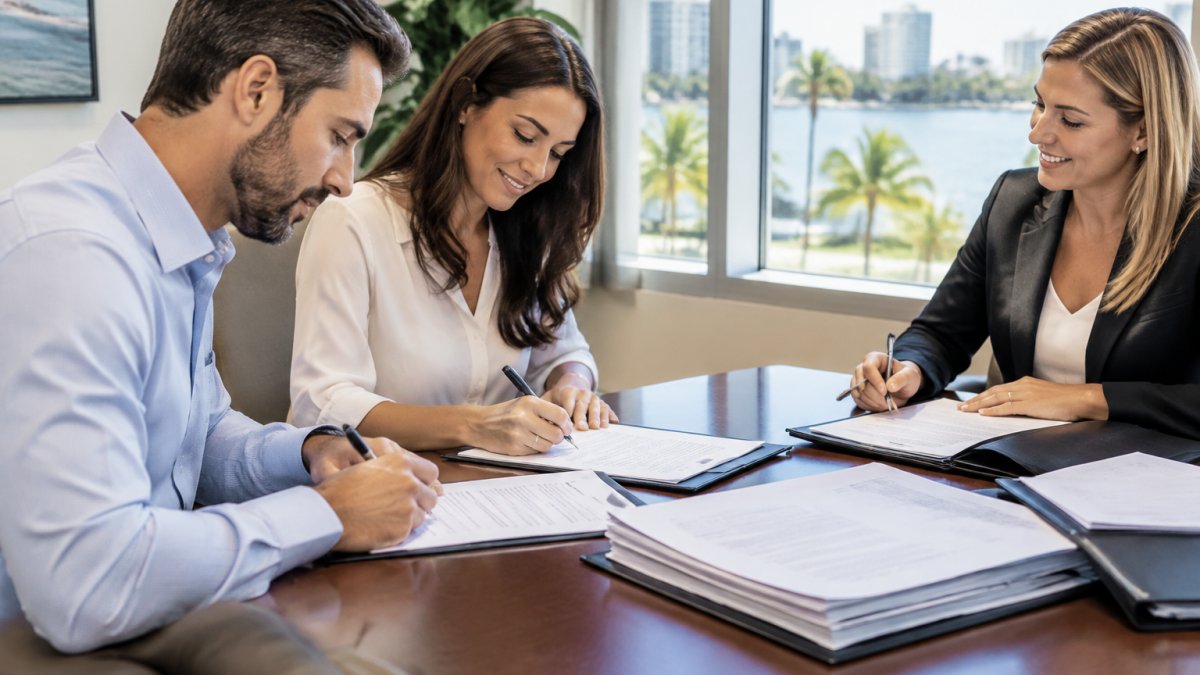
The warranty deed is the document that actually transfers ownership. It is signed by the seller, not the buyer, and must be recorded in the county's official records to complete the property transfer. The buyer signs the promissory note and mortgage, plus the closing disclosure acknowledgments.
Identity verification is now standard. Bring a valid photo ID, and expect the closing agent to confirm your identity before notarizing signatures. Remote online notarization may be available for some signings, though not every lender or title company supports it.
Wire Fraud, Delays, and Remote Closings: What Can Go Wrong
Most closing problems fall into three buckets: money sent to the wrong place, deadlines that slip, and signatures that cannot happen in person. Each has a concrete response, and knowing it in advance is the difference between a hiccup and a loss.
Wire fraud: verify before you send. Criminals monitor email threads between buyers, agents, and closing agents, then send spoofed messages that look like legitimate wire instructions with a changed account number. Once funds leave, recovery is difficult and often incomplete.
- Treat every set of wire instructions as unverified until you confirm it by phone.
- Call your closing agent at a number you obtained independently, from the title company's website, a prior signed document, or the contact on your contract, never a number in the email itself.
- Read the account details back verbally and ask the agent to confirm the last four digits of the account on file.
- Ask whether the title company requires a callback verification before accepting wires; many publish that requirement and will refuse a wire that arrives without it.
- Be suspicious of any last-minute change to wiring instructions, any urgency, and any request to keep the change confidential.
- If you suspect fraud after sending, call your bank immediately to request a recall, then notify your closing agent and report the incident.
When closing is delayed. Delays usually trace to a title defect that takes longer to clear, a lender condition requiring another document, an appraisal that comes in low, or a party who cannot perform on the closing date.
Remote and electronic closings. Remote online notarization allows a signer to appear before a notary by audio-video link, verify identity, and sign electronically. Some title companies offer it, and it can be useful for out-of-state buyers and sellers.
Post-closing follow-up. After signing, confirm the deed was recorded in the county's official records, collect keys and possession per the contract, transfer utilities, and keep your final Closing Disclosure and title policy.
Start Looking: Getting Your Closing Scheduled With The Comerford Group
The closing process rewards preparation, and the right representation makes the difference between a deadline met and a deadline missed. The Comerford Group guides buyers and sellers through the transaction process, from the first MLS search onward.
Our team brings extensive knowledge of Florida's East and West Coast markets and a solution-driven approach to each transaction. We provide expert support throughout the entire process. One client put it plainly: "They solve problems and get the deal done."
Before you schedule a closing, understand the market you are buying into. Our Florida real estate market trends and buyer guide gives you the current picture. When you are ready, get started with The Comerford Group and move toward your closing date with a team that stays responsive from first showing to final signature.
The closing table is the finish line, but the work that gets you there starts weeks earlier. If you want a team that tracks every deadline and answers the phone after closing too, The Comerford Group is ready to help. Our agents provide expert guidance for buyers and sellers, deep knowledge of Florida's coastal markets, and access to comprehensive MLS listings so your search starts in the right place.
Frequently Asked Questions
How long does a Florida real estate closing take?
Closing timelines depend on your contract deadlines, the type of financing, and any appraisal or title issues. The Florida home closing timeline depends on your contract deadlines: inspection period, loan approval, appraisal, title search and clear title, and the lender's closing disclosure waiting period. Ask your closing agent for a milestone calendar at contract signing so you know who is responsible for each date.
What should buyers bring to the signing appointment?
Bring a government-issued photo ID for identity verification, your closing disclosure, proof of homeowner's insurance, and any documents your lender requested. If funds are due, wire them per the instructions your closing agent gave you by phone-verified written confirmation, never from an email alone. Many buyers also bring a cashier's check as a backup and a copy of the final walkthrough notes. Confirm with your agent a day ahead whether the closing is in person or remote.
Who pays the seller at closing in Florida?
The closing agent or title company disburses funds. Buyer loan money and the buyer's cash-to-close arrive first, then the agent pays off the seller's mortgage using the payoff statement, covers prorated property taxes and any other amounts owed at closing, and sends the remaining seller proceeds by wire or check. Deed recording happens after funding, which is why sellers rarely walk out with a check in hand the same hour.
What are common mistakes during the closing process?
The biggest is ignoring a wire instruction email. Call the closing agent at a number you already have to confirm wiring details, because wire fraud is the costliest closing scam. Other mistakes: skipping the final walkthrough, missing the closing disclosure review window, letting homeowner's insurance lapse before funding, and failing to ask who pays each fee on the settlement statement. Read the closing disclosure line by line at least three days before signing.
Can I close remotely on a Florida property?
Remote closings may be available through some title companies, including for out-of-state buyers. You will still complete identity verification and sign the same Florida closing documents, often through a secure portal with a notary on video. Ask your closing agent early whether your lender accepts remote signing, since some loan programs require in-person notarization for certain documents.
What happens if closing is delayed?
Delays usually come from title defects, appraisal gaps, loan underwriting conditions, or a payoff statement arriving late. Your contract's deadlines and extension clauses govern what happens next, so read them before agreeing to a new date. A short extension may be possible if all parties agree in writing. If a party cannot perform, the contract's default and earnest money deposit terms decide who keeps the funds, which is why an attorney review matters.